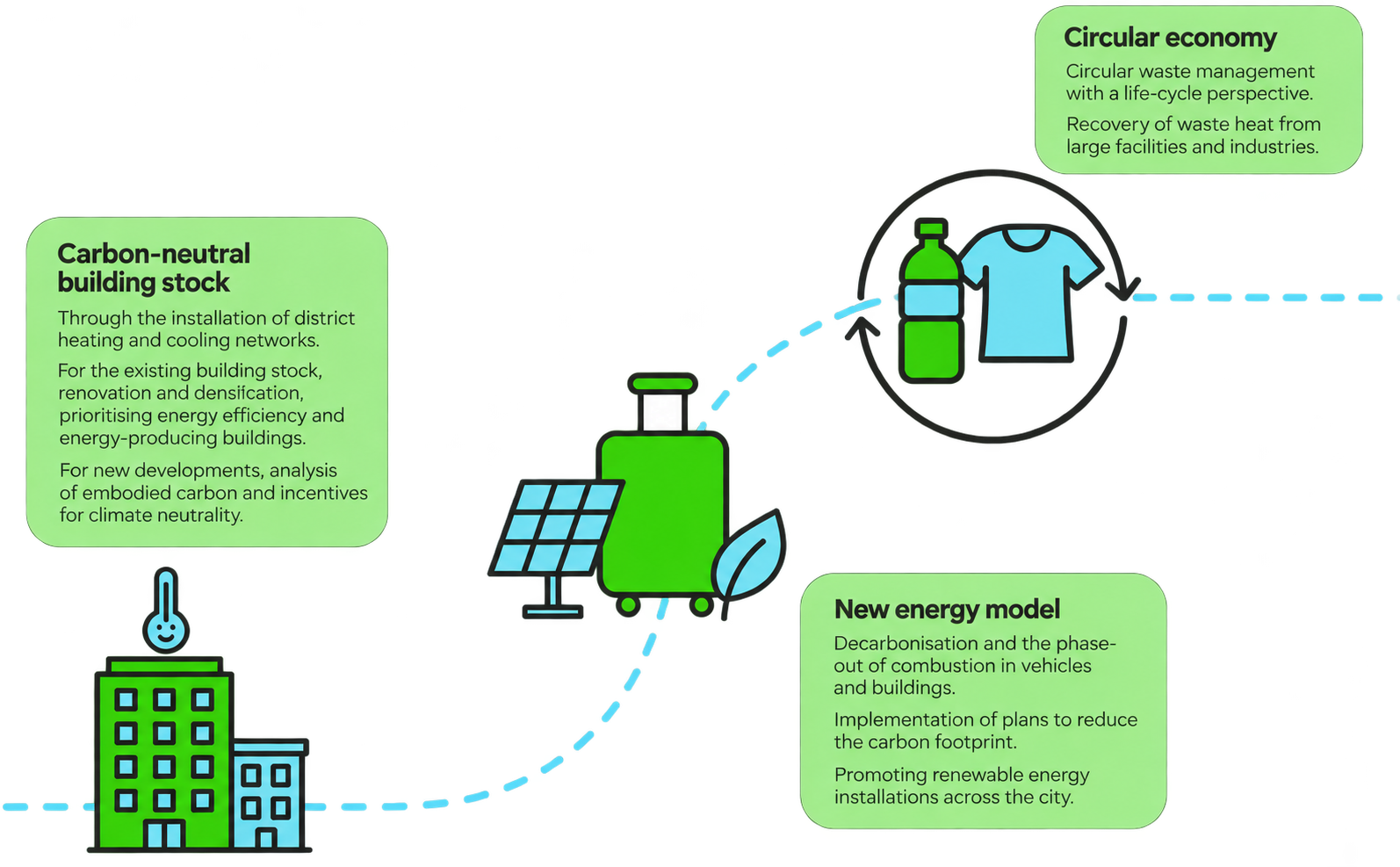
Madrid aimstobecomeclimate neutral by 2030–2050, and to do so itmust continue moving forward ondecarbonisation, passing throughtransitionalphasesuntilthe final goalisreached, withthesupport and guidanceof a Strategic Plan.
The ClimateNeutrality Working Group isfocusedonmovingtowardsclimateneutralitybysettingspecificobjectives, supportedby concrete linesofaction and monitoringindicatorsthatmakeitpossibletotrackthedecarbonisationprocess and estimateitscosts, whilealsoensuringflexibility in themeasures and a long-termvisionthat can adaptto future scenarios and emergingtechnologies.
Participants from the public, private, and third sectors
0
Working sessions
0
Working groups
0
Participants
The first focused on a new energy model oriented towards a decarbonised, energy-producing city, minimising the use of combustion and making the most of local energy potential.
The second focused on new urban developments and their alignment with climate neutrality goals, prioritising buildings that are not only carbon neutral but also energy-producing and water-recycling.
The third worked on the renewal of the existing building stock, proposing to accelerate the energy renovation of existing buildings, encourage comprehensive urban regeneration projects, and reconcile energy efficiency with heritage protection.
And the fourth analysed the transition towards climate neutrality, ensuring that no one is left behind, because a city that cares for everyone is one that places people’s wellbeing at the centre of its energy transition.
Academia and universities
0
Public administration
0
Professional associations
0
Companies
0
Independent experts
0
Third sector
0
Working groups
City energy model
New urban developments
Renovation and urban regeneration
Just transition
Ideas discussed
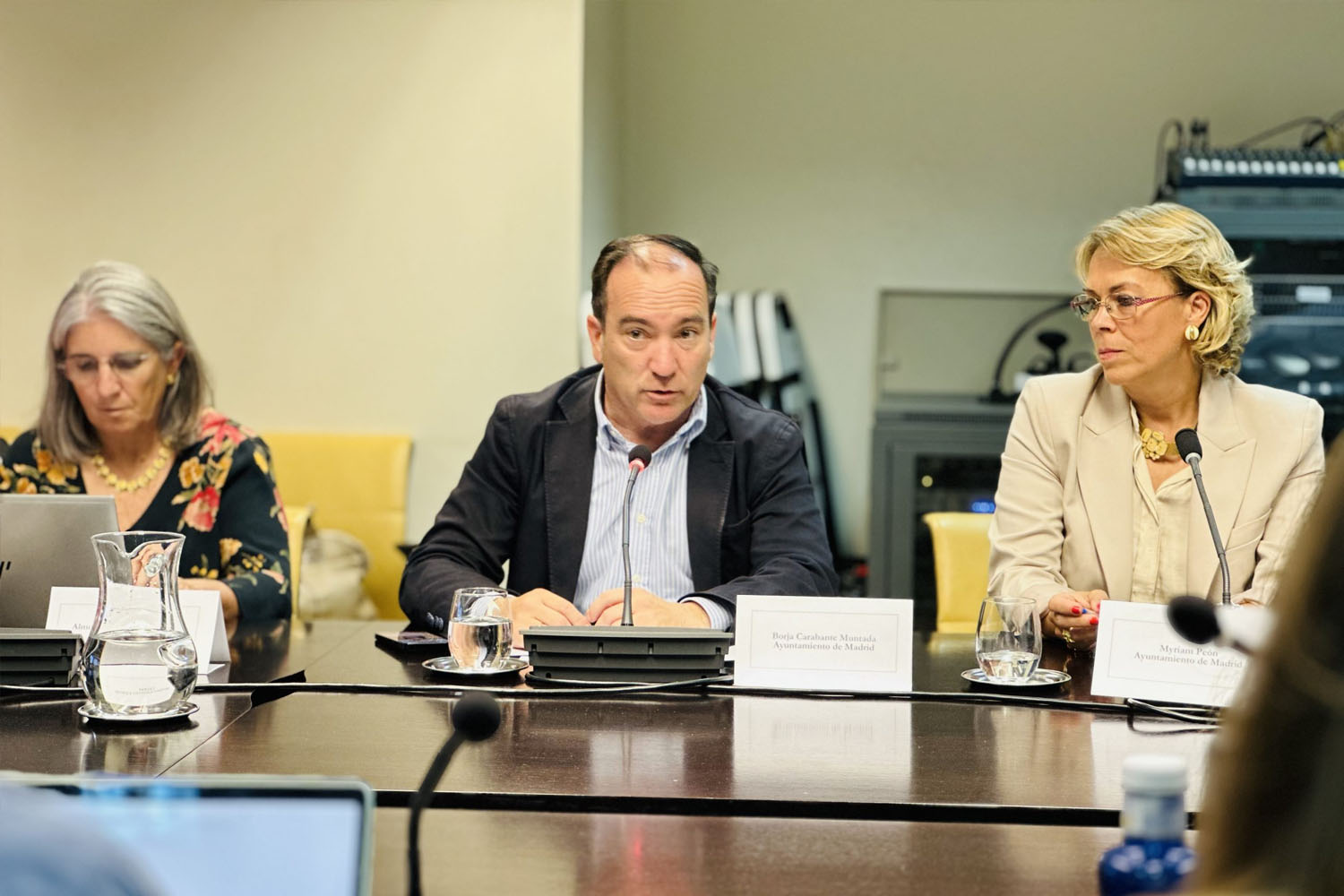
This working group brought together representatives from institutional, technical, academic, and private-sector backgrounds. Their reflections confirmed that climate neutrality is an essential objective for the city’s future, closely linked to public health and to the energy model adopted.
They argue that reducing energy demand should be the priority, above the question of which energy source is used, and they also emphasise the scale of intervention, making the neighbourhood the most appropriate scale because it allows synergies to be created, the microclimate to be regulated, and circular economy dynamics to be activated.
In addition, they place social justice at the centre of the process, ensuring support for the most vulnerable groups, avoiding gentrification processes, and promoting active citizen participation in the energy transition.